Ki vette feleségül Julius Caesar-t?
Cornelia házas Julius Caesar .
A házasság -ben ért véget.
Pompeia házas Julius Caesar .
A házasság -ben ért véget.
Calpurnia házas Julius Caesar .
A házasság -ben ért véget.
Julius Caesar: Házassági állapot idővonala
1 Pixel = 1 Month

Julius Caesar
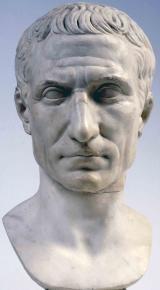
Gaius Julius Caesar (12 or 13 July 100 BC – 15 March 44 BC) was a Roman general, statesman, and author who was the dictator of the Roman Republic almost continuously from 49 BC until his assassination in 44 BC. A member of the First Triumvirate, he led the Roman armies through the Gallic Wars and defeated his political rival Pompey in Caesar's civil war. He consolidated power and proclaimed himself dictator for life in 44 BC, which contributed to the political conditions that led to the collapse of the Roman Republic and the emergence of the Roman Empire. For his role in these events, he is regarded as one of the most influential historical figures.
In 60 BC, Caesar, Crassus, and Pompey formed the First Triumvirate, an informal political alliance that dominated Roman politics for several years. Their attempts to amass political power were opposed by many in the Senate, among them Cato the Younger with the private support of Cicero. Caesar rose to become one of the most powerful politicians in the Roman Republic through a string of military victories in the Gallic Wars, completed by 51 BC, which greatly extended Roman territory. During this time, he invaded Britain and built a bridge across the Rhine. These achievements and the support of his veteran army threatened to eclipse the standing of Pompey. The alliance between Caesar and Pompey slowly broke down and, by 50 BC, Pompey had realigned himself with the Senate. With his command expiring and the Gallic Wars largely concluded, the Senate ordered Caesar to step down from his military command and return to Rome. In early January 49 BC, Caesar openly defied the Senate by crossing the Rubicon and marching towards Rome at the head of an army. This began Caesar's civil war, which he won, leaving him in a position of near-unchallenged power and influence in 45 BC.
After assuming control of government and pardoning many of his enemies, Caesar set upon a vigorous reform and building programme. He created the Julian calendar to replace the republican lunisolar calendar, reduced the size of the grain dole, settled his veterans in new overseas colonies, greatly increased the size of the Senate, and extended citizenship to communities in Spain and what is now northern Italy. In early 44 BC, he was proclaimed "dictator for life". Fearful of his power, domination of the state, and the possibility that he might make himself king, a group of senators led by Brutus and Cassius assassinated Caesar on the Ides of March (15 March) 44 BC. A new series of civil wars broke out and the constitutional government of the Republic was never fully restored. Caesar's great-nephew and adoptive heir Octavian, later known as Augustus, rose to sole power after defeating his opponents thirteen years later. Octavian then set about solidifying his power, transforming the Republic into the Roman Empire as its emperor.
Caesar was an accomplished author and historian; much of his life is known from his own accounts of his military campaigns. Other contemporary sources include the letters and speeches of Cicero and the historical writings of Sallust. Later biographies of Caesar by Suetonius and Plutarch are also important sources. Caesar is considered by many historians to be one of the greatest military commanders in history. His cognomen was subsequently adopted as a synonym for emperor; the title Caesar was used throughout the Roman Empire, and gave rise to modern descendants such as Kaiser and Tsar. He has frequently appeared in literary and artistic works.
Bővebben...
Cornelia

Cornelia (c. 97 – c. 69 BC) was either the first or second wife of Julius Caesar, and the mother of his only legitimate child, Julia. A daughter of Lucius Cornelius Cinna, Cornelia was related by birth or marriage to many of the most influential figures of the late Republic.
Bővebben...Julius Caesar
Pompeia

Pompeia (élt i. e. 1. században) Quintus Pompeius Rufus consul és Cornelia Sulla (Lucius Cornelius Sulla leánya) gyermeke, és Caius Iulius Caesar második felesége volt i. e. 67-től, egy évvel az első feleség, Cornelia Cinna halála után.
Ez a házasság közeledés volt Lucius Cornelius Sulla felé, mivel a populares polgárháborús párt, aminek vezetői Lucius Cornelius Cinna és Caius Marius voltak éppen vesztésre állt. Ez a feleségválasztás i. e. 63-ban hozta meg gyümölcsét, amikor Caesar pontifex maximus lett.
I. e. 62-ben a Dea Bona ünnepen Publius Clodius Pulcher női ruhába öltözve bejutott Caesar házába, és bár házasságtörésre nem volt semmilyen bizonyíték, a dolognak válás lett a vége.
Bővebben...Julius Caesar
Calpurnia

Calpurnia Pisonis Gaius Julius Caesar harmadik felesége volt. Férje őt csalta meg Kleopátra egyiptomi királynővel, akitől Caesarion nevű fia született. Nagy érzelmi csapásként érte Caesar nyilvános bejelentése Rómában, miszerint Kleopátrával közös gyermekük született. Calpurnia mindig is tudott hitvese hűtlenkedéseiről, de azokat nem rótta fel férjének, mert nem akarta elveszíteni rangját és biztos pozícióját, mint Caesar hitvese, s mert őszintén szerette férjét és felnézett rá elért sikerei miatt. Nem tartotta legnagyobb vetélytársát, az egyiptomi királynőt veszélyesnek, amikor tudomást szerzett viszonyáról Caesarral. Ám amikor a királynő, akit a római polgárok gyűlöltek feslett életmódja miatt, Rómába érkezett, szinte kényszerítette szeretőjét, hogy a nagy nyilvánosság előtt is ismerje el gyermeküket mint örökösét, Calpurnia megértette, milyen nagy befolyással van hitvesére Kleopátra.
Caesar végül is nem Caesariont nevezte meg utódjául, hanem megmaradt azon elhatározásánál, hogy Octavianus nevű unokaöccse legyen örököse, ugyanis régebben nem is reménykedett már benne, hogy fiú utódja születik feleségétől, így a legközelebbi férfirokona jöhetett csak szóba utódként. S habár nem vált el Calpurniától hivatalosan, Egyiptom trónján meghagyta Caesariont és Kleopátrát. Csakhogy Octavianus még így is vetélytársnak tartotta Kis Cézárt, részt vett a Caesar életét kioltó merénylet kitervelésében is, s magához ragadta a hatalmat Rómában, nem sokkal később pedig megölette Kis Cézárt. Calpurniát mélyen lesújtotta hitvese halála, s onnantól kezdve visszavonultan, csendesen élte le élete hátralévő részét.
Bővebben...